Revenue before orchard maturity
The development sequence prioritizes an event venue, farm store, markets, and pumpkin experiences while the apple orchard establishes and begins producing.
A revenue-first plan for a community-focused farm where families, schools, travelers, and event guests can experience Kansas agriculture, seasonal traditions, education, and small-town hospitality.
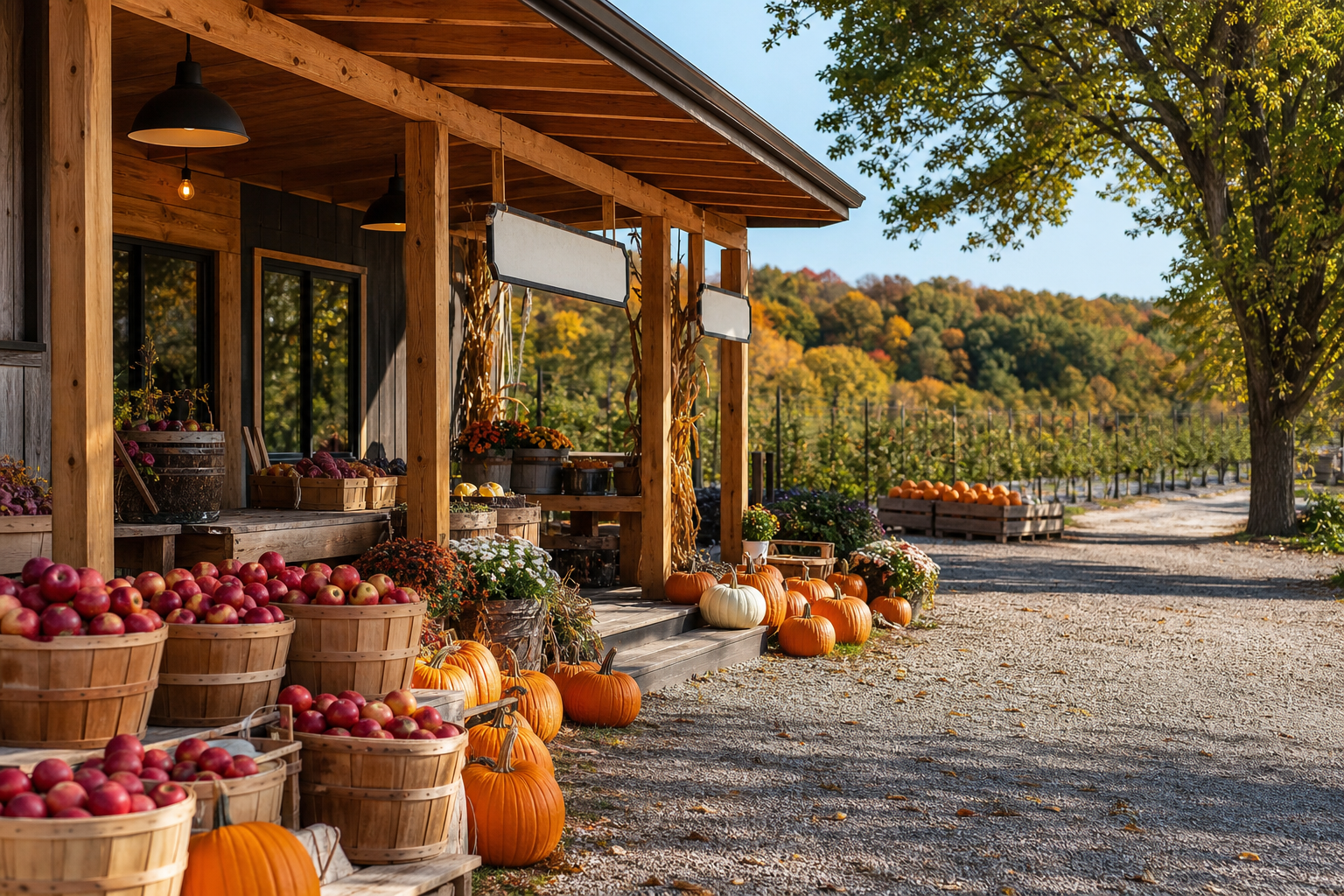
The plan pairs long-lived agricultural assets with earlier-producing event, retail, seasonal, and educational revenue. Each phase is intended to make the next phase more useful and financially supportable.
The current roadmap prioritizes property diligence and shared infrastructure, then introduces venue, store, market, and pumpkin revenue before relying on mature orchard production. Planning figures remain preliminary and subject to site selection, bids, financing, and final design.
Property, survey, title, zoning, soil, water, sunlight, and master planning.
Access, power, water, drainage, fencing, parking, equipment storage, and windbreaks.
Event venue, farm store, markets, pumpkins, private rentals, and preview programming.
Orchard production, U-pick, cider, education, trails, festivals, and added amenities.
The model is intentionally diversified across private events, retail, seasonal crops, admissions, education, and long-term orchard products rather than depending on a single harvest or visitor season.
 Early revenue
 A multi-season barn or pavilion is planned as an early revenue engine. The working plan targets 15-30 events annually after the venue is established.
 Retail
 A visitor hub for regional produce, baked goods, preserves, gifts, branded merchandise, and seasonal market weekends.
 Seasonal
 An initial 5-10 acre program can support U-pick, pumpkin sales, admissions, fall activities, photo settings, and rotating planting zones.
 Long-term
 An initial 5-10 acre block, roughly 500-1,500 trees depending on layout, is planned for U-pick, fresh fruit, education, and future cider or processing.
 Education
 Programming can cover food systems, pollinators, soil health, prairie ecology, pruning, grafting, and hands-on agriculture.
 Programming
 Harvest events, hayrides, demonstrations, vendor weekends, and future spring or winter programs extend visitor spending.
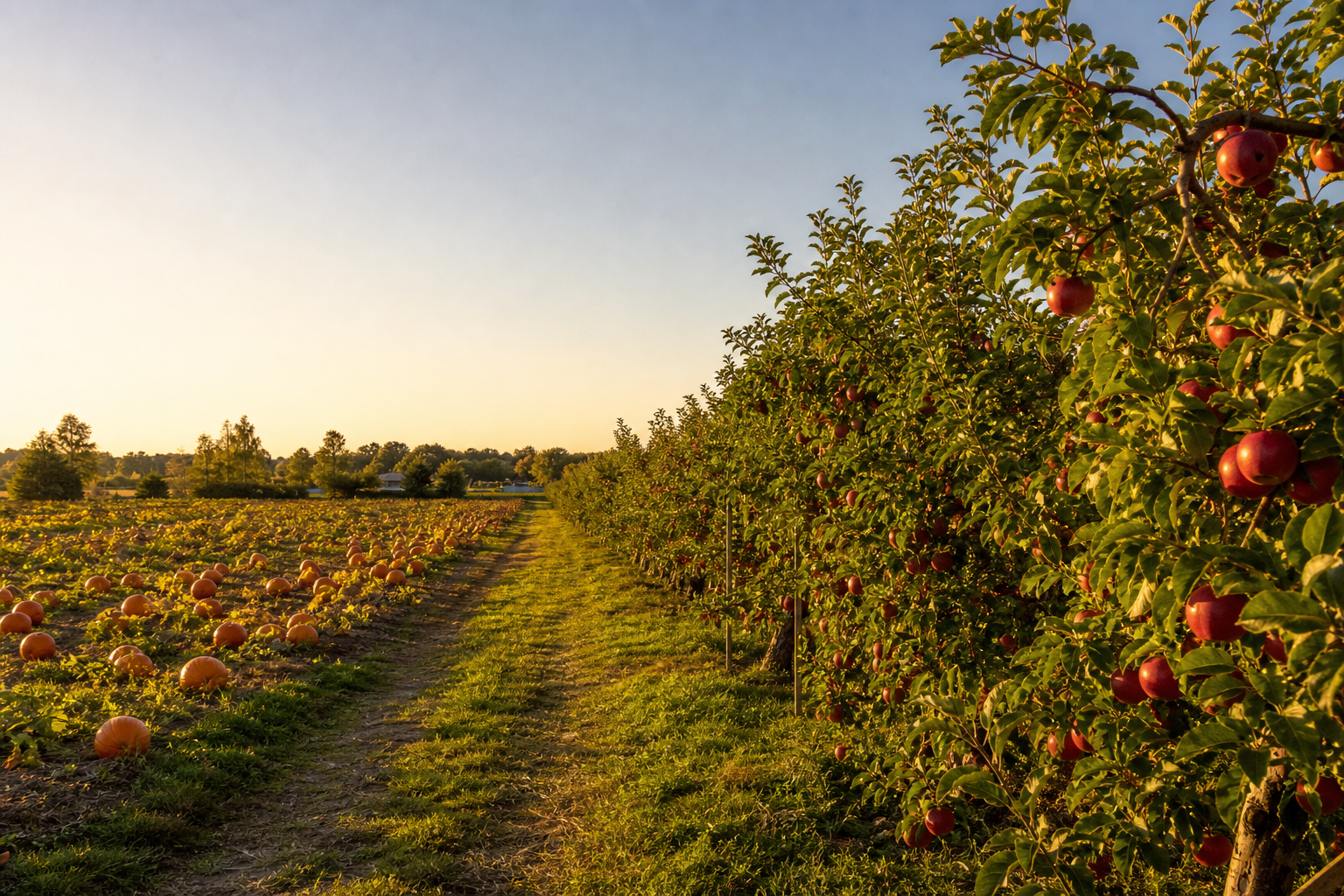
The active phase is vision, research, and site selection. Later capital is intended to follow completed diligence, infrastructure readiness, and evidence that earlier operating components can support expansion.
Compare properties around Hays, complete soil, water, sunlight, zoning, access, and financing diligence, and confirm a workable master-plan footprint.
Secure the property, complete surveys and approvals, then establish access, utilities, drainage, fencing, parking, windbreaks, and agricultural site preparation.
Develop the event venue and farm store, begin markets and seasonal programming, establish pumpkin production, and introduce the project through preview events.
Establish the orchard, add U-pick and education, expand value-added products, and layer in trails, festivals, visitor amenities, and year-round programming.
Private materials can provide the working roadmap, preliminary budget ranges, property diligence, financing avenues under evaluation, operating assumptions, and the questions that remain open before development commitments are made.
Request private materialsThe 3-5 year revenue-first sequence, phase deliverables, operating milestones, and expansion logic.
Property comparisons, soil and water testing, zoning, access, utilities, drainage, and expansion analysis.
Planning-level land and phase budgets, contingency, revenue assumptions, and sources-and-uses scenarios.
Financing pathways under evaluation, including agricultural lending, veteran programs, grants, and conservation cost-share.
A concise overview of the opportunity, current development work, and the materials available for private review.
Ask a different questionIt is a planned destination agritourism experience for families, schools, groups, and visitors across the Hays region and Western Kansas. The concept combines an apple orchard, pumpkin patch, farm store, educational programming, seasonal festivals, and private events.
The region has families, schools, community organizations, and travelers, but few attractions offer a comparable combination of agriculture, education, entertainment, and seasonal experiences. The project is intended to become a regional destination rather than a single-purpose attraction.
Potential revenue sources include fresh apple and pumpkin sales, U-pick experiences, admissions, field trips, seasonal festivals, concessions, farm store retail, merchandise, and private events. The intent is for these activities to support one another within a single destination.
Potential properties are evaluated for visibility, safe access, utilities, usable acreage, guest circulation, orchard suitability, seasonal attraction space, and long-term expansion potential. Financial sustainability remains a central consideration throughout the evaluation process.
The project is in Phase 1: vision, research, and site selection. Active work includes property comparison, soil and water diligence, concept refinement, preliminary budget modeling, and preparation for lender and investor conversations.
Current planning assumes a staged 3-5 year buildout. The sequence begins with land and infrastructure, then prioritizes earlier revenue from events, retail, markets, and pumpkins while the orchard establishes and matures.
The financing strategy under evaluation combines owner investment, agricultural or commercial lending, phased reinvestment of operating revenue, veteran and beginning-farmer programs, and eligible grant or conservation cost-share opportunities. No funding source should be considered committed until approved and documented.
Early notes model a 25-30 acre land purchase at approximately $125,000-$300,000, site preparation and infrastructure at $25,000-$60,000, orchard and crop establishment at $30,000-$75,000, core facilities at $100,000-$250,000, visitor amenities at $25,000-$60,000, and initial programming setup at $15,000-$40,000, plus a 10-15% contingency. These are preliminary feasibility ranges, not contractor bids, financing commitments, or final sources and uses.
Prospective investors may request the business plan, property portfolio, financial information, development assumptions, and current project updates. Sensitive forecasts, terms, and diligence materials are shared privately with appropriate recipients.
No. This page is provided for general informational purposes only. It is not an offer to sell securities or a solicitation of an offer to buy securities. Any future offering would be made only through appropriate legal documents.